
Do you find that you spend excessive amounts of time trimming metal sheets into particular lengths? Trimming manually can be a tedious process. It may slow down production and reduce consistency. However, there is an option known as cut to length line, which makes the process automated.
How Does the Cut to Length Line Operate?
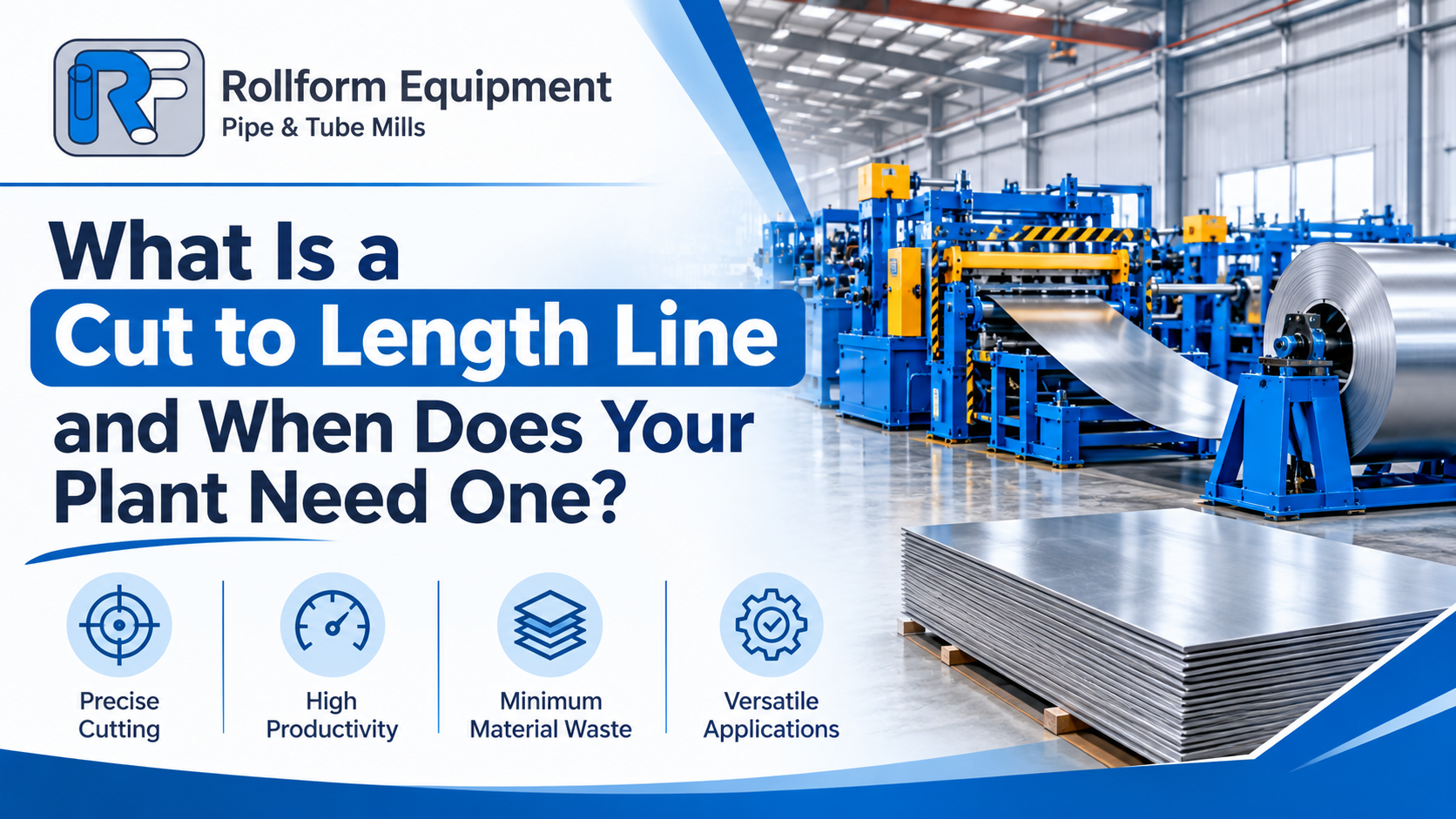
The cut to length line uses a number of organized processes to ensure that uniform metal sheets are created.
· Strip Loading: The decoiler keeps the coil of metal and feeds the strip into the production line.
· Straightening: The straightening rollers eliminate any bend, wave and internal stress of the metal strip.
· Length Control: The feeding rollers advance the metal strip while the control system determines the necessary sheet length.
· Cutting: The shear cuts the metal strips into metal sheets depending on the specified length.
· Stacking Sheets: The formed metal sheets are conveyed to the stacker unit.
When is it Time for Your Plant to Consider a Cut to Length Line?
Not every manufacturing facility requires automatic cutting machinery. Yet, there are production scenarios where adding a cut to length line would help increase production efficiency.
· Your Plant Processes a High Number of Production Orders
When you deal with high production numbers, manual cutting gets complicated. A cut to length line will help to ensure continuous production and eliminate repetitive manual tasks.
· You Need for Standardized Sheet Sizes
Incorrect measurements will lead to difficulties during production and assembly. Computerized measurement and cutting will aid in ensuring standardized sheet sizes. This is more effective where your factory provides parts that have standardized sizes.
· Material Wastage is on the Rise
Inaccurate measurement and cutting leads to wastage of precious material. A cut-to-length line allows for controlling the size of sheets and optimizing the use of material. It will also minimize errors resulting from repetitive work.
· Efficiency in Your Manufacturing Process Could Be Improved
If your manufacturing process involves spending a lot of time measuring, cutting, and handling metal sheets, then it may be a good idea to automate your process. A CTL line would combine several processes into one.
Things to Think About Prior to Acquiring a Cut to Length Line
Before you have a particular piece of machinery, there are a number of things you should take into consideration:
· Type of Material: Make sure that the cutting line is capable of handling the type of metals that your plant is dealing with, such as steel, stainless steel, or aluminum.
· Material Thickness: Check the capabilities of the machine when it comes to the thickness and width of the metal material.
· Required Cutting Length: Make sure that you consider the minimum and maximum sheet length that you will need.
· Speed of Production: See to it that the ability of the CTL line is able to meet your production demands.
· Automation Capacity: Determine the automation capacity of the line as far as controls, measurements, and stacking are concerned.
Conclusion
The cut-to-length line enables the production of accurate metal sheets by plants with minimal human effort. This is significant when you have increased volume or need for consistency. Therefore, determine your requirements and buy a suitable machine.